
A loaded truck that struggles to pull can put the turbocharger under suspicion. The same symptom, however, can come from restrictions or faults elsewhere in the engine system. Replacing the turbo before checking those causes may leave the original problem unresolved.
For a Komatsu HD785-7, the useful first step is to record what changed: when the loss of power began, whether it appears only under load, and whether it comes with smoke, unusual noise, oil consumption, or an engine warning. Those observations give a technician a starting point for the service manual’s diagnostic procedure.
Follow the air path first
When an HD785-7 loses power under load, the turbocharger may be the first component suspected. Before deciding it needs replacement, check the path the air takes through the engine. A dirty air cleaner, damaged intake pipe, or loose connection can affect airflow and produce symptoms that resemble a turbocharger problem.
Record what the technician finds at the air cleaner, along the intake piping, and at the connections before and after the turbocharger. If testing is needed, use the limits and procedures in the service manual for that machine. The goal is to identify where the problem begins, so a replacement addresses the cause rather than just the symptom.
Look beyond the compressor
If the air path does not explain the complaint, the diagnosis should continue through the related systems. Exhaust restrictions, fuel delivery faults and lubrication problems can produce similar symptoms or contribute to turbocharger damage. Garrett recommends checking the engine systems before installing a replacement turbocharger because damage to the turbo can be a result of another fault.
That distinction matters during a repair: a new assembly cannot correct a blocked intake, a fuel-system fault or an unresolved oil-supply problem. Ask the technician to document the identified cause and the corrective work, not only the part selected for replacement.
When the part number becomes relevant
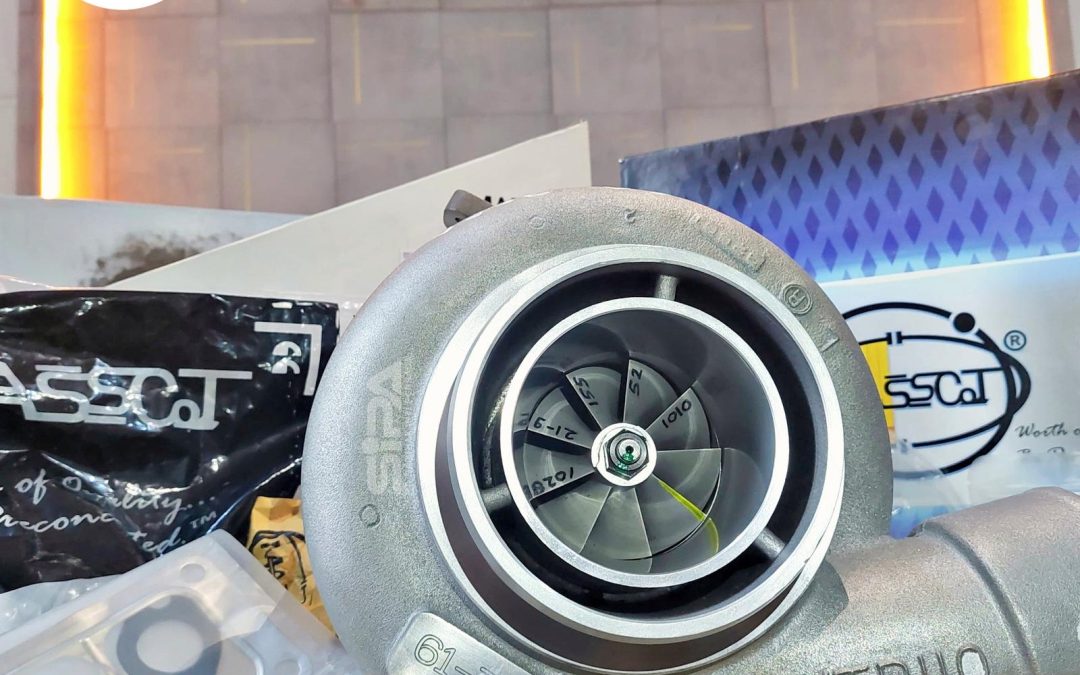
Once inspection supports replacing the turbocharger, identify the required assembly from the machine serial number, current component marking and applicable parts documentation. SIPA’s Turbocharger Assembly 6505-67-5040 product page provides the product reference and an enquiry route for the Komatsu HD785-7. The part number should still be checked against the exact machine configuration before ordering.
Installation position also deserves a separate check. SIPA’s HD785-7 turbocharger position reference explains the RH and LH references shown in its catalogue. If the existing marking and the parts record do not agree, send both references to SIPA for review rather than treating the numbers as interchangeable.
What to send with an enquiry
A useful enquiry includes the machine model and serial number, the part number or marking on the removed assembly, clear photos, and a short description of the symptom and inspection findings. This gives the supplier the context to check the requested reference while the maintenance team continues the technical diagnosis.
If the inspection points to Turbocharger Assembly 6505-67-5040, view the product or contact SIPA with those details.